This is the 6x (six-by) companion to "2x (Two-By) Speaker Cabinet Wiring: Series vs. Parallel Fundamentals" and "4x (Four-By) Speaker Cabinet Wiring Layouts" (both also under Speakers). Read those first if the basic series/parallel rules are new to you - everything below is the same math, just applied across three pairs of speakers instead of one or two. For a quick sense of where six speakers fits in that progression, here are the 2x and 4x wiring patterns again, side by side:
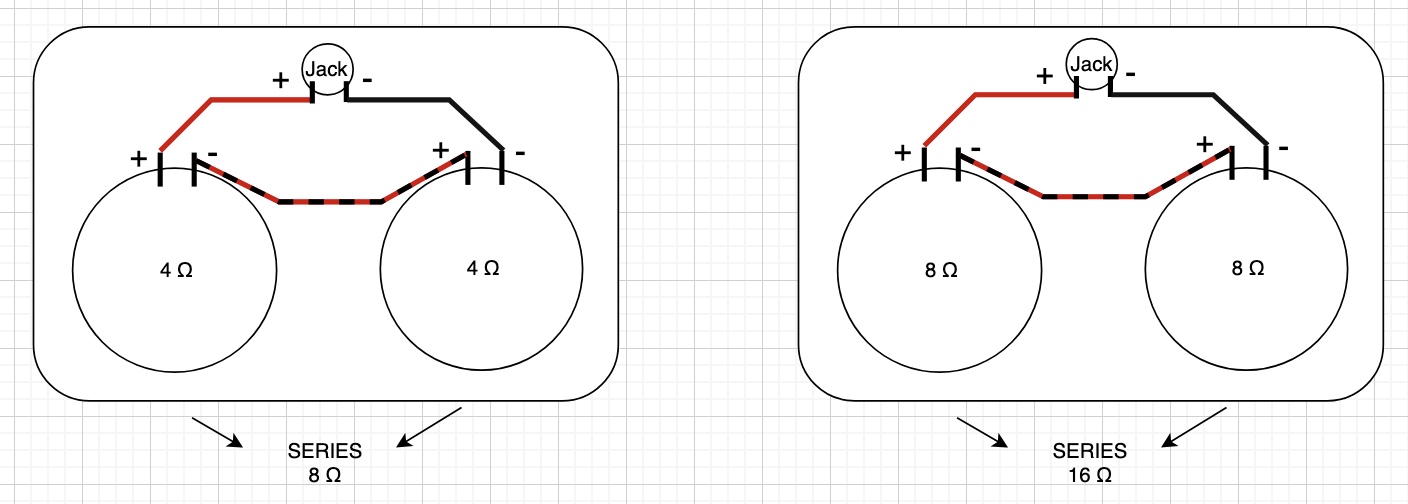
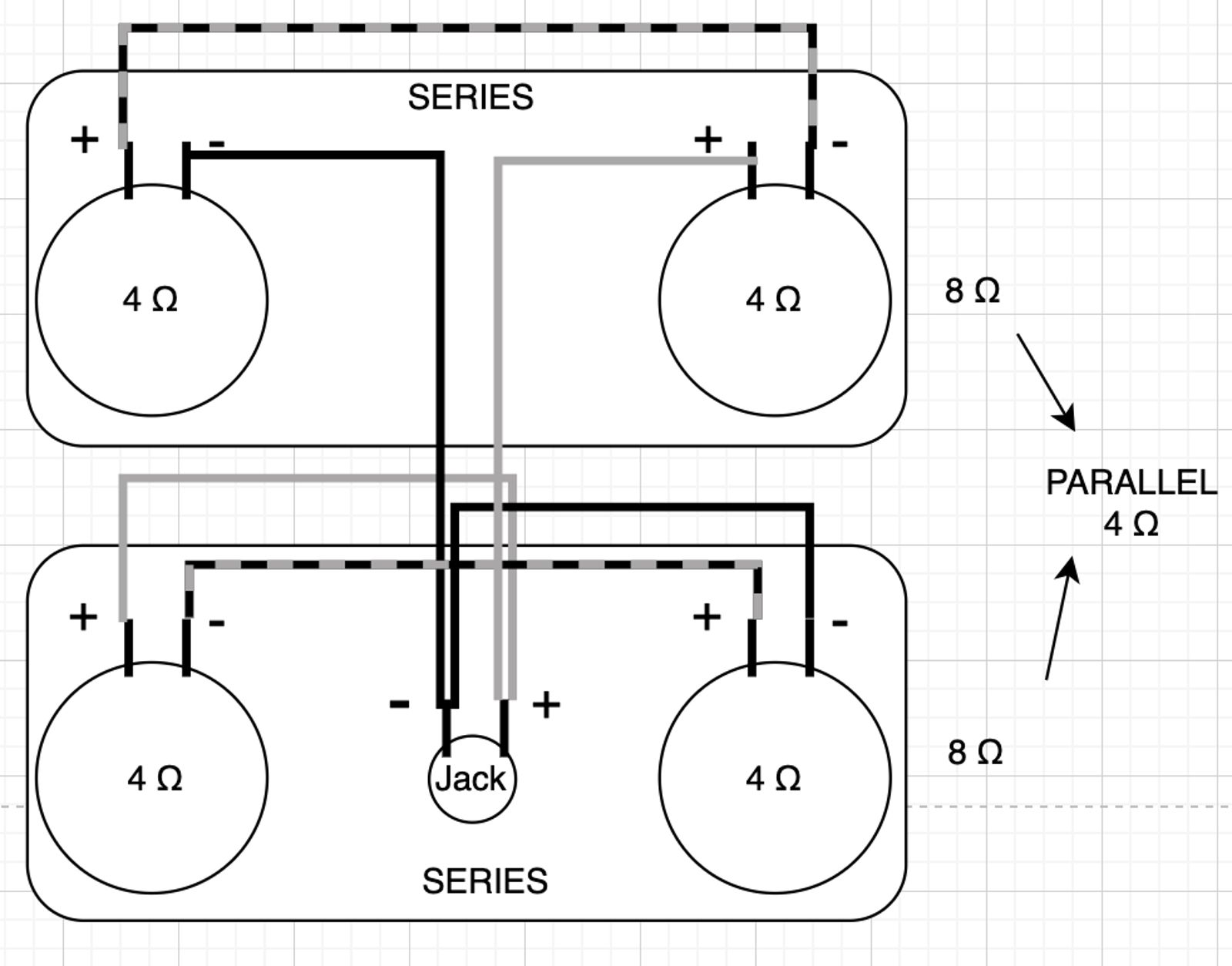
Three Series Pairs, Then Parallel
Six speakers grouped into three pairs, each pair wired in series, with all three series pairs then wired together in parallel.
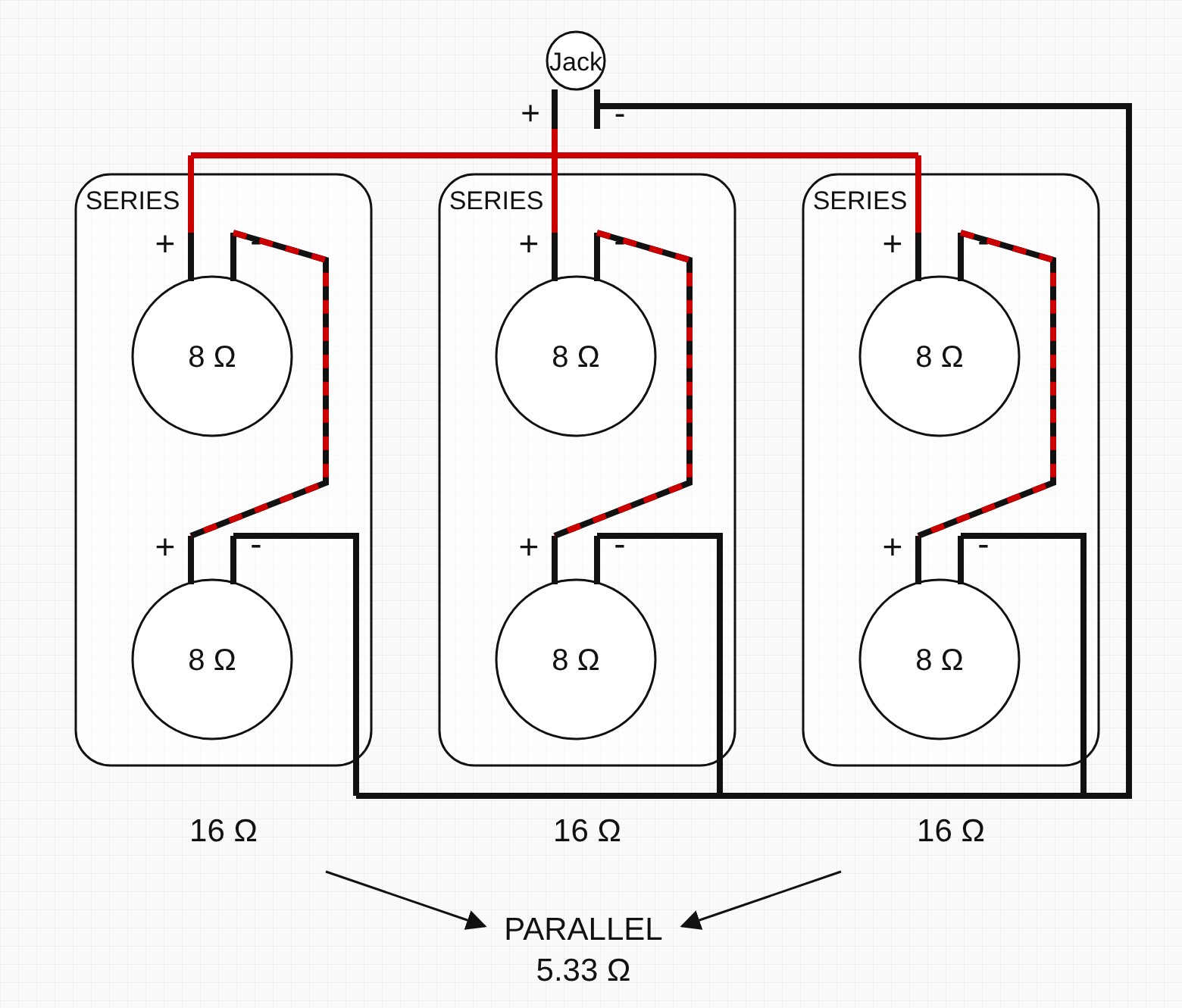
Each pair in series: 2 x 8 Ω = 16 Ω. Extending the reciprocal-sum rule from the fundamentals article to three equal branches instead of two: 1 / (1/16 + 1/16 + 1/16) = 16 / 3 = 5.33 Ω net.
All Six in Parallel
All six speakers wired directly in parallel to the same two output leads.
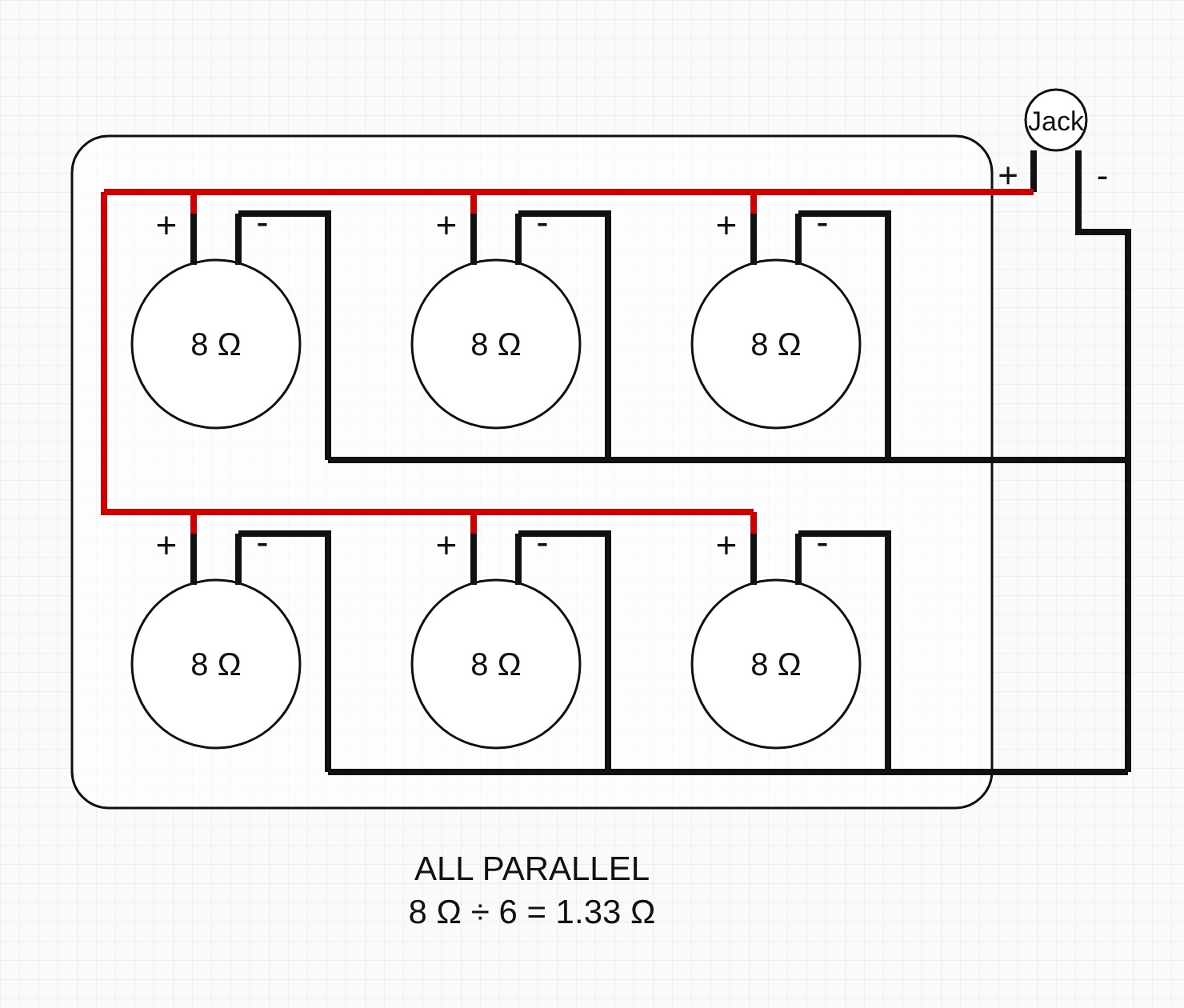
For six equal-value speakers in parallel, the reciprocal-sum rule reduces to the value divided by the speaker count: 8 Ω / 6 = 1.33 Ω net.
All Six in Series
All six speakers wired one after another in a single loop.
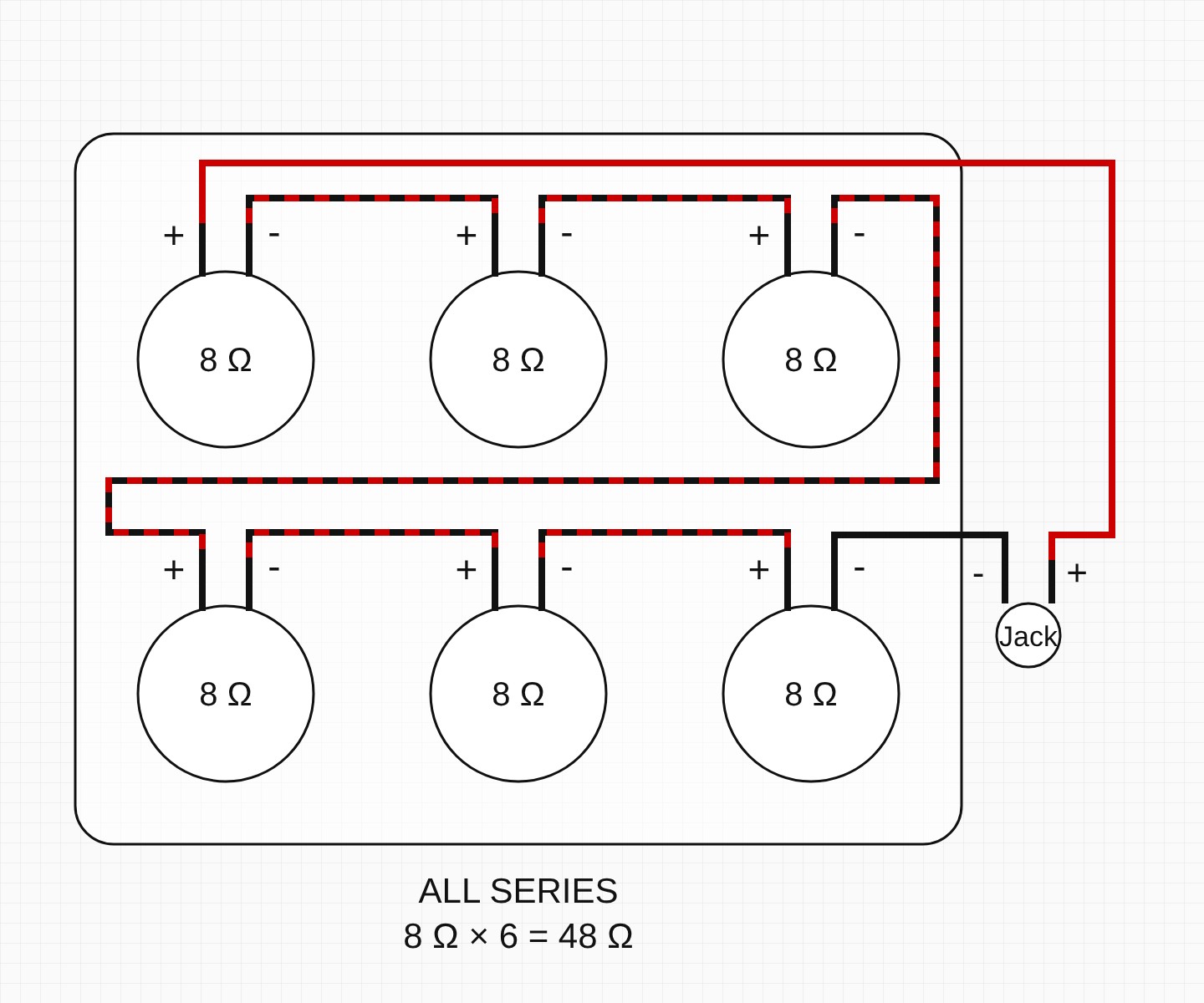
For speakers in series, impedances just add: 8 Ω x 6 = 48 Ω net.
Worth Knowing Before You Build One of These
The math on all three layouts above is correct, but 1.33 Ω and 48 Ω are atypical loads in the guitar amp world - most amps are only rated for 4, 8, or 16 Ω, and essentially none are built for either extreme. 1.33 Ω is far below what almost any amplifier, tube or solid-state, is rated to drive safely. 48 Ω is high enough that it won't damage most amps, but you'll get very little usable output power into it. The three-series-pairs-then-parallel layout, at 5.33 Ω, lands closer to a usable range but still isn't a standard amp tap. Treat all three primarily as a demonstration of how the math scales with speaker count, not as a recommended real-world wiring choice - a matched pairing (like the 2x and 4x layouts) is almost always the more practical route.
See Also
Other articles in the Speakers section build on this one - open them from the Reference Tools list:
- 2x (Two-By) Speaker Cabinet Wiring: Series vs. Parallel Fundamentals - the basic series/parallel rules this article extends.
- 4x (Four-By) Speaker Cabinet Wiring Layouts - the same math one step earlier in the progression.
- Speaker Wire: AWG vs. Distance vs. Ohms - once you know the net impedance from the configuration you picked, use this to size the cable run.
- Speaker Cable Power-Loss Calculator - plug that net impedance in directly to see the loss for your specific cable run.